You are here:Home » Blog » Climate Control » Energy Efficiency Ratio (EER) of Outdoor Telecom Cabinet Air Conditioner Explained
Energy Efficiency Ratio (EER) of Outdoor Telecom Cabinet Air Conditioner Explained
Views: 0 Author: Cytech Publish Time: 2026-03-04 Origin: Site
This article offers a detailed technical overview including :
1.What Is Energy Efficiency Ratio (EER)?
2.How Outdoor Telecom Cabinet Air Conditioners Work
3.How EER Is Calculated
4.What Is a Good EER Value?
5.EER vs SEER vs COP
6.Factors That Affect EER Performance
7.Why High EER Matters for Telecom Infrastructure
8.How to Improve Cabinet Cooling Efficiency
9. How to Choose the Right EER for Your Project
When it comes to outdoor telecom cabinet air conditioners, energy efficiency is not just a nice bonus — it’s a mission-critical factor. If you’re managing telecom base stations, 5G infrastructure, or energy storage systems, you already know that cooling runs 24/7. And that means energy bills never sleep.
So here’s the big question: How efficient is your cabinet air conditioner?
That’s where the Energy Efficiency Ratio (EER) comes into play. Think of EER as the fuel efficiency rating of your cooling system. The higher it is, the less energy you burn to keep equipment safe.
Let’s break it down in plain English.
What Is Energy Efficiency Ratio (EER)?
EER measures how efficiently an air conditioner converts electrical power into cooling output. In simple terms, it tells you how much cooling you get for every watt of electricity consumed.
It’s like asking: How far can this car go on one gallon of fuel?
Except instead of miles per gallon, we measure cooling per watt.
The Basic Formula of EER
The formula is straightforward:
EER = Cooling Capacity ÷ Power Input
Cooling capacity is measured in:
-BTU per hour (BTU/h),
-or Watts (W)
Power input is measured in watts (W).
For example:
If an outdoor telecom cabinet air conditioner provides 6,000 W of cooling and consumes 2,000 W of electricity,
EER = 6000 ÷ 2000 = 3.0
The higher the number, the better the efficiency.
Why EER Matters in Telecom Applications
Outdoor telecom cabinets operate 24/7. Unlike residential AC units, they don’t get a break. That means even a small improvement in EER can translate into massive annual savings.
Imagine running hundreds or thousands of base stations. A 10% efficiency improvement could mean tens of thousands of dollars saved every year.
That’s not small change.
Understanding Outdoor Telecom Cabinet Air Conditioners
Before diving deeper into EER, we need to understand the system itself.
What Makes Them Different from Residential ACs
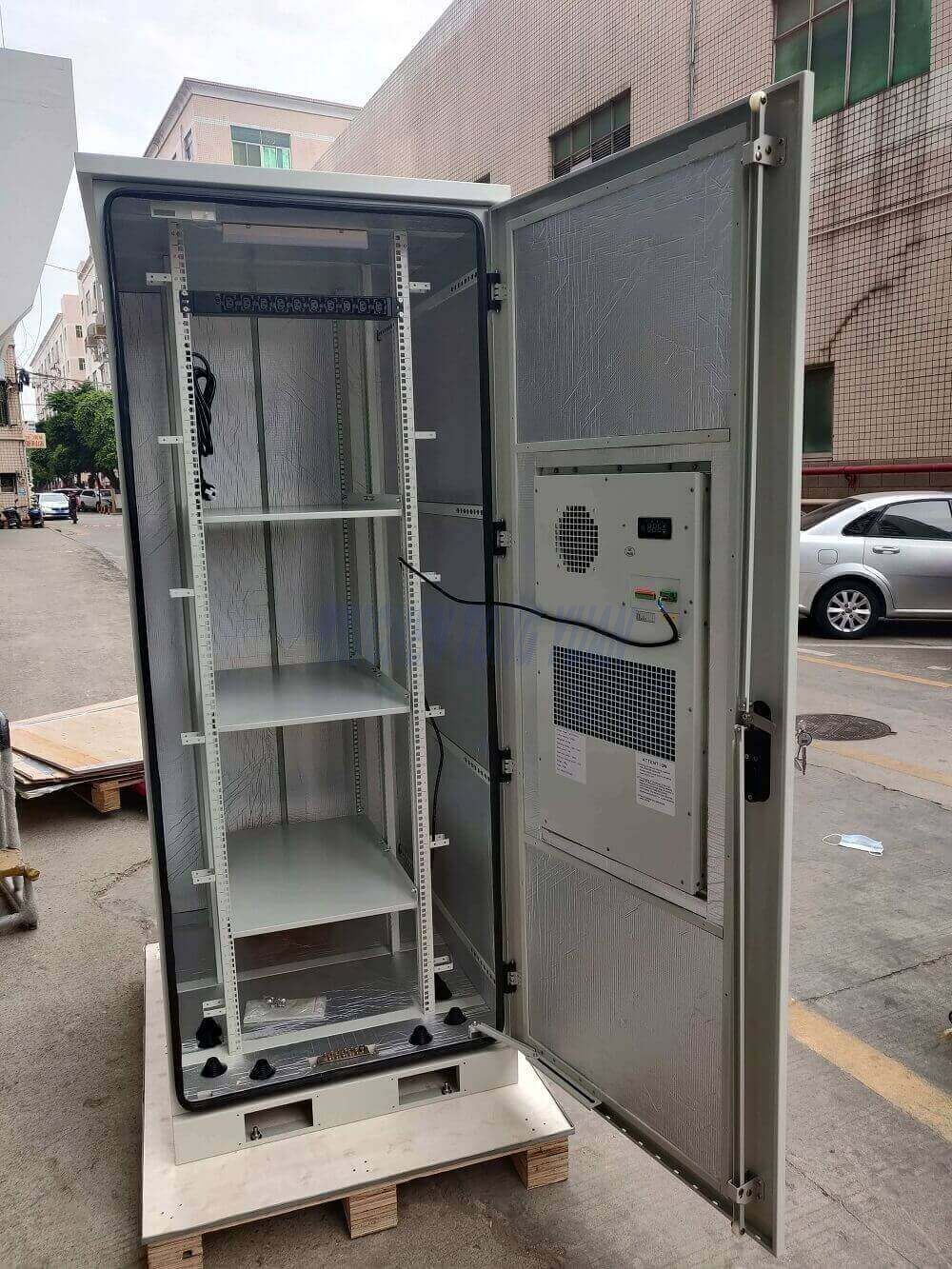
Outdoor telecom cabinet air conditioners are built differently from home air conditioners.
They are:
◆Designed for harsh outdoor environments
◆Built to handle high ambient temperatures
◆Engineered for dust, rain, and corrosion resistance
◆Compact and wall-mounted
They cool sealed enclosures, not open rooms.
It’s like cooling a high-tech vault instead of a living room.
Typical Applications in Telecom and Energy Storage
You’ll find them in:
★4G and 5G base stations
★Fiber optic network cabinets
★Outdoor battery energy storage systems
★Industrial control enclosures
In all these applications, temperature control equals system survival.
How EER Is Calculated for Outdoor Cabinet Air Conditioners
EER isn’t just a random number printed on a label. It’s calculated under standardized conditions.
Standard Testing Conditions
Typically, EER is tested at:
●Outdoor ambient temperature around 35°C (95°F)
●Indoor return air temperature around 27°C (80°F)
These conditions simulate real-world operation for telecom environments.
However, real outdoor temperatures can go much higher — which affects actual efficiency.
Metric vs BTU Measurement Systems
There are two common systems:
1.BTU-based EER (U.S. standard)
2.Metric EER (W/W) (international standard)
Metric EER values typically range from:
-2.5 to 4.0 for standard units
-4.0+ for high-efficiency inverter systems
What Is a Good EER for Outdoor Telecom Cabinet AC?
Now we’re getting to the practical part.
Standard Efficiency Range
For traditional fixed-speed cabinet air conditioners:
→EER between 2.5 and 3.5 (W/W) is common.
These systems are reliable but not optimized for energy savings.
High-Efficiency Models
Modern inverter-based models can achieve:
EER 3.5 to 5.0+
That’s a major improvement.
Higher EER means:
↓Lower electricity consumption
↓Less heat stress
↑Longer equipment life
It’s like upgrading from an old gasoline engine to a hybrid vehicle.
EER vs SEER vs COP – What’s the Difference?
Confused about all these acronyms? You’re not alone.
●EER: Measured at fixed conditions
●SEER: Seasonal average (used in residential AC)
●COP: Coefficient of Performance (metric efficiency measure)
For telecom cabinets, EER is the most relevant metric.
Why Telecom Systems Focus on EER
Telecom cooling systems run under steady load conditions. That makes fixed-condition measurement (EER) more meaningful than seasonal averages.
Simple. Direct. Reliable.
Factors That Affect EER in Outdoor Telecom Cabinets
EER isn’t just about the air conditioner. It’s influenced by multiple factors.
Ambient Temperature
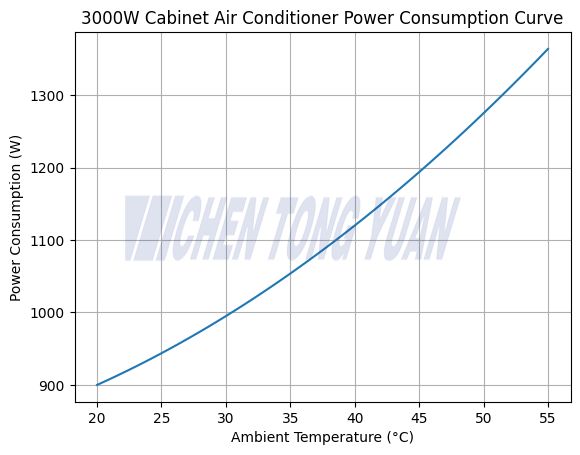
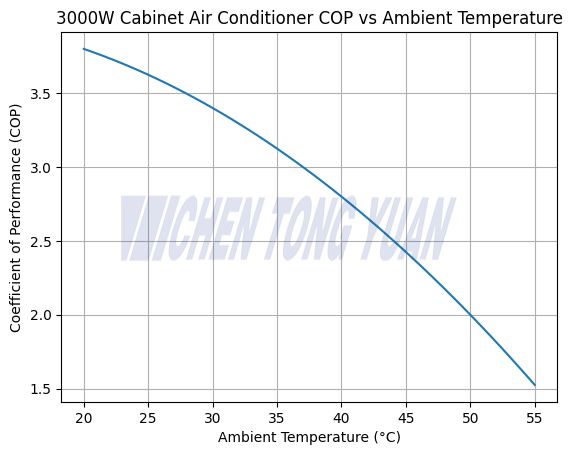
Higher outdoor temperatures reduce efficiency.
If your site operates in desert or tropical climates, EER performance becomes even more critical.
Compressor Type
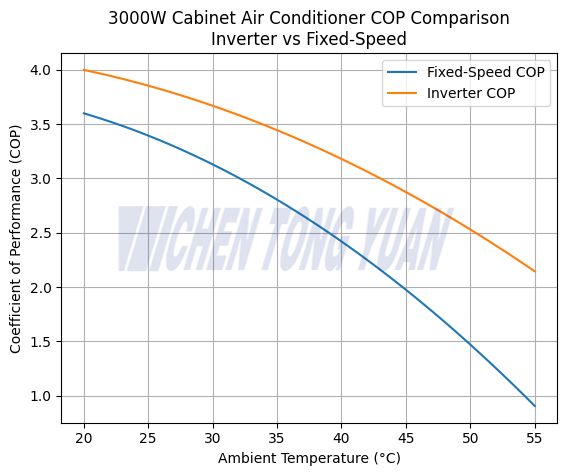
Fixed-speed compressors:
●Turn fully on or off
●Consume more energy
Inverter compressors:
●Adjust speed dynamically
●Maintain stable temperature
●Improve EER significantly
Here is a compressor specification for reference only.