The structural design of commercial and industrial energy storage battery cabinets plays a critical role in ensuring the safety, performance, cost-effectiveness, and adaptability of battery systems to various application scenarios. High-quality energy storage battery cabinets not only affect system lifespan and reliability but also directly impact operational safety and ease of maintenance.
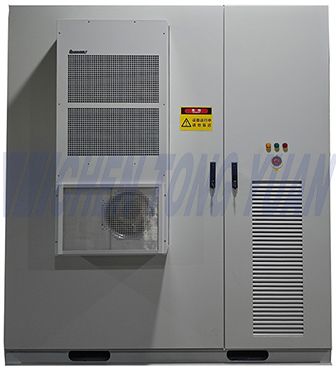
Core design principles for energy storage battery cabinets include manufacturing process and assemblability design, structural strength design, environmental adaptability, safety protection, and thermal protection. Together, these principles ensure high reliability throughout the lifecycle of the system, from design and production to transportation, installation, and long-term operation.
Commercial and industrial deployments increasingly require flexible battery energy storage enclosures, capable of supporting peak shaving, backup power, renewable integration, and grid services. As applications expand from factories and data centers to EV charging stations and microgrid systems, the expectations for cabinet durability, layout optimization, and environmental resilience continue to rise. This shift drives the need for high-reliability energy storage system enclosures that can maintain consistent performance under complex operating conditions.
As a professional manufacturer of energy storage battery cabinets, Cytech focuses on structural engineering, thermal safety, and long-term reliability for commercial and industrial energy storage applications.
With extensive experience in outdoor cabinet design and industrial-grade manufacturing, Cytech develops energy storage battery cabinet solutions that align with global safety standards and diverse deployment scenarios, including peak shaving, backup power, renewable energy integration, and grid-support systems. From material selection and structural reinforcement to thermal protection and safety integration, Cytech emphasizes lifecycle reliability, ease of maintenance, and adaptability to complex operating environments.
The following video presents real-world deployment and operation of industrial cabinet systems across various application scenarios:
1. Manufacturing Process and Assemblability of Energy Storage Battery Cabinets
During the structural design of energy storage battery cabinets, it is essential to ensure that all components meet the required standards for manufacturability and assemblability. Common manufacturing processes include sheet metal, injection molding, casting, forging, and welding, all of which influence strength, appearance, precision, and cost.
Manufacturing Process for Energy Storage Battery Cabinets
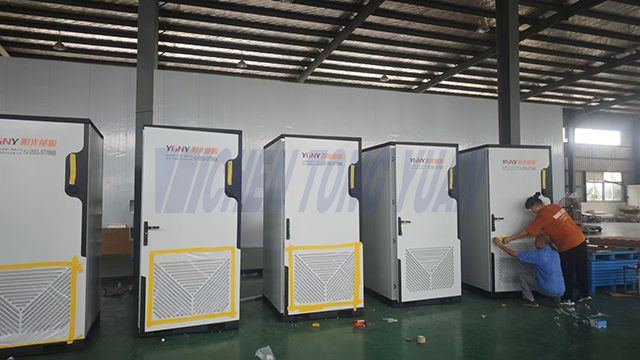
The manufacturing process significantly affects the overall performance of energy storage battery cabinets, including production equipment capabilities, batch manufacturability, component precision, heat treatment, and cost. Selecting the optimal manufacturing method ensures structural integrity and functional reliability. For example, load-bearing frames often use welded or reinforced sheet metal, while smaller or detailed components may use injection molding or casting.
A well-planned manufacturing process improves production efficiency, reduces defect rates, and ensures consistency, giving commercial and industrial energy storage battery cabinets a competitive advantage.
Manufacturers also need to consider compliance with global certifications such as UL9540A, IEC 62619, and GB/T 16935, as these standards influence material selection and structural processes. High-precision production workflows reduce dimensional deviations, ensuring that each battery energy storage cabinet enclosure maintains uniform quality during mass manufacturing. This level of consistency is essential for scalable commercial deployments where multiple cabinets must operate in parallel.
Assemblability of Energy Storage Battery Cabinets
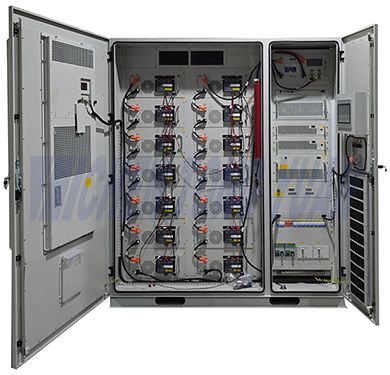
Assemblability refers to the ease of assembly of components and subassemblies. Good design reduces assembly difficulty, minimizes errors, and enhances overall product quality. Techniques include modular designs, reducing fasteners, and reserving space for maintenance.
Improved assemblability is particularly critical for large-scale industrial energy storage battery cabinets, where fast and accurate installation reduces labor costs and downtime.
In addition, good assemblability enhances long-term serviceability. Designs that include quick-release modules, front-access wiring, and maintenance pathways significantly simplify both routine inspections and emergency repairs. These improvements are especially valuable in large-capacity energy storage battery cabinet systems, where downtime directly affects operational revenue and grid stability. A modular platform also allows easier system expansion as capacity demands increase.
Rational Layout of Energy Storage Battery Cabinets
A rational layout divides the system into independent units such as battery modules, clusters, control units, and cooling systems. This simplifies assembly, improves maintenance access, and reduces wiring complexity, leading to better airflow and heat dissipation.
Optimized layouts ensure long-term reliability and efficient operation of outdoor energy storage battery cabinets under varying environmental conditions.
Modern layouts also incorporate intelligent cable routing and sensor distribution to support digital monitoring systems. This enables real-time tracking of thermal data, electrical performance, and environmental parameters inside the high-density energy storage battery cabinet, reducing the risk of failures caused by hidden wiring issues or uneven airflow. With the rise of AI-driven predictive maintenance, well-organized layouts provide essential data accuracy and stability.
Reliability and Safety of Energy Storage Battery Cabinets
Using mature and verified structural designs, such as fireproof compartments, standardized module trays, and reinforced bases, minimizes development risks and ensures stability. Reliability-focused design prevents structural failures and safeguards both the system and personnel, ensuring long-lasting operation of commercial energy storage battery cabinets.
2. Structural Strength Design for Energy Storage Battery Cabinets
The complete lifecycle of energy storage battery cabinets spans manufacturing, transportation, commissioning, and operation. Each stage imposes unique stress requirements, requiring tailored structural strength design.
Manufacturing Phase Strength for Energy Storage Battery Cabinets
During manufacturing, cabinets must endure handling, movement, and hoisting stresses. Heavy battery clusters require reinforced brackets and chassis. Proper design prevents early-stage damage and ensures safe handling of industrial energy storage battery cabinets.
Transportation Phase Strength for Energy Storage Battery Cabinets
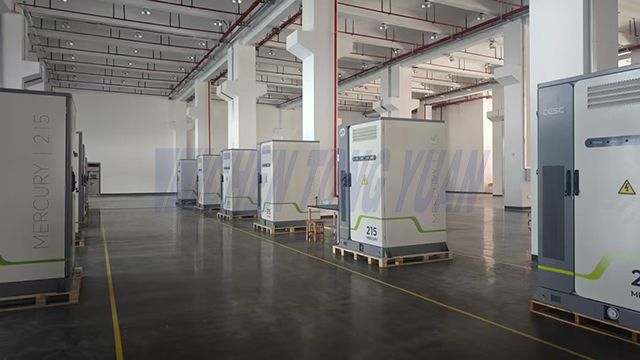
Transport exposes cabinets to vibrations, tilts, and impacts, whether by sea, road, or off-road. Designs must resist deformation, corrosion, and mechanical fatigue to maintain integrity during delivery of commercial energy storage battery cabinets.
Commissioning Phase Strength for Energy Storage Battery Cabinets
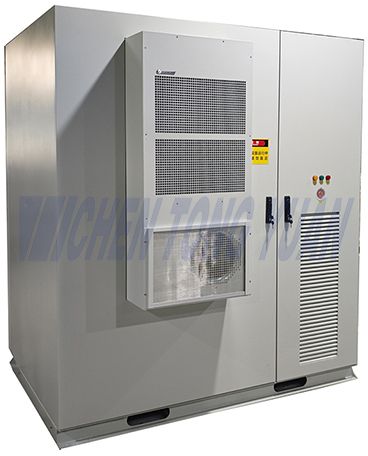
During installation, hoisting and positioning can cause stress concentrations. Strong structural design ensures safe handling of heavier systems as capacities expand to 3–6MWh, avoiding deformation or localized failures in modular energy storage battery cabinets.
Operation and Maintenance Phase Strength for Energy Storage Battery Cabinets
Long-term outdoor operation subjects cabinets to wind, rain, temperature variations, and mechanical stress. Robust structural strength, combined with maintenance-friendly design, extends service life and reliability of outdoor energy storage battery cabinets.
In remote or high-altitude installations, cabinets experience additional structural challenges including low-temperature brittleness, ultraviolet exposure, and increased wind load. Reinforced frames and enhanced anti-fatigue structures help outdoor battery energy storage enclosures perform reliably in these harsh scenarios. For seismic regions, anti-vibration base structures and shock-absorbing mounts further reduce the risk of mechanical damage.
3. Environmental Adaptability Design of Energy Storage Battery Cabinets
Environmental adaptability ensures energy storage battery cabinets can operate safely under local climate conditions, including rain, snow, and salt exposure. Corrosion resistance, sealing, and material selection are crucial.
Climate and Environmental Requirements for Energy Storage Battery Cabinets
Structural components must meet salt spray test standards, typically ≥96 hours, and up to 720 hours in harsh environments. Testing ensures durability of industrial energy storage battery cabinets in outdoor and coastal installations.
Outdoor Operating Environment for Energy Storage Battery Cabinets
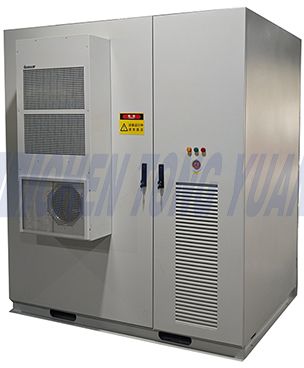
For outdoor use, IP rating design ensures protection against dust, rain, and extreme weather. Standard systems require at least IP54, while high-sand or high-salt areas need IP55 or higher, maintaining long-term reliability of outdoor energy storage battery cabinets.
Material engineering also plays a vital role in environmental adaptability. Galvanized steel, aluminum-zinc alloy plates, powder coatings, and nano-ceramic pretreatments significantly enhance corrosion resistance in coastal or industrial-pollution zones. These materials ensure that long-lifespan energy storage cabinet enclosures retain structural integrity even after long-term exposure to moisture, salt, and corrosive gases.
4. Safety Protection Design for Energy Storage Battery Cabinets
Safety protection is essential to prevent hazards from environmental conditions, internal failures, or thermal events. Energy storage battery cabinets must resist external impacts, electromagnetic interference, and internal component failures.
Structural Robustness for Energy Storage Battery Cabinets
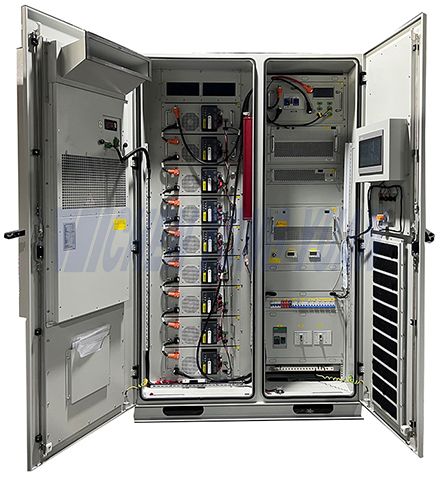
The outer casing must withstand extreme weather, impacts, and sandstorms. EMC design and optimized thermal management ensure stable operation under interference. Structural robustness protects both the cabinet and its internal systems in commercial energy storage battery cabinets.
Advanced cabinet safety design incorporates internal explosion-relief pathways, gas-venting channels, and reinforced compartment doors to manage pressure changes during emergencies. These features help contain thermal events and prevent propagation within lithium battery energy storage cabinets. High-seal gaskets and multi-layer door structures also reduce the risk of external contaminants entering the cabinet, protecting sensitive electronics and battery cells.
Lifecycle Safety Protection for Energy Storage Battery Cabinets
Battery aging and failures require multi-layered protections: real-time health monitoring, thermal runaway suppression, electrical isolation, and fault localization. These strategies maintain safe operation of industrial energy storage battery cabinets even under abnormal conditions.
5. Thermal Protection Design Guidelines for Energy Storage Battery Cabinets
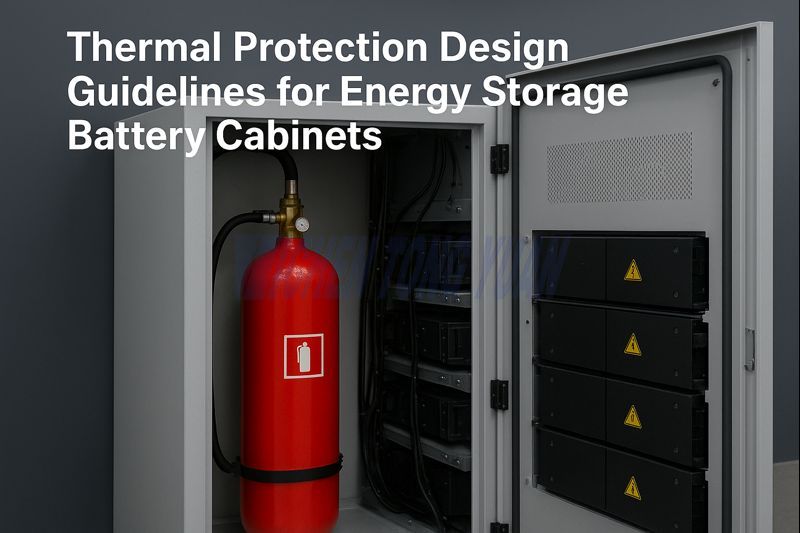
Thermal safety ensures stable operation and fire prevention in energy storage battery cabinets, combining fire suppression, temperature management, and overcurrent protection.
Automatic Fire Extinguishing Devices in Energy Storage Battery Cabinets
Devices respond immediately to fires or overheating, minimizing damage and protecting critical battery modules in commercial energy storage battery cabinets
Modern fire suppression systems are increasingly integrated with intelligent controls, enabling coordinated response through sensors, HVAC systems, and the battery management system. This creates a closed-loop safety network that improves the overall fire resilience of commercial ESS cabinet designs. Early-warning smoke sensors and thermal imaging modules also assist in early detection and mitigation.
Firefighting Media Selection for Energy Storage Battery Cabinets
Environmentally friendly extinguishing agents such as perfluorohexanone or heptafluoropropane prevent damage to sensitive components while ensuring high fire suppression efficiency.
Environmental Adaptability in Energy Storage Battery Cabinets
Systems operate reliably under -20℃ to +50℃, ≤2000m altitude, and ≤95% humidity, suitable for various industrial and commercial applications.
Temperature Rise Limitation for Energy Storage Battery Cabinets
Thermal design maintains battery cells and electronics within safe ranges per GB/T 36545, preventing heat accumulation and prolonging system life.
To better manage temperature rise, manufacturers are adopting advanced cooling solutions such as liquid cooling plates, hybrid air-liquid systems, and cabinet-level HVAC units. These technologies maintain stable thermal profiles within high-capacity battery energy storage cabinets, especially in regions with extreme heat. Optimized ducting further enhances cooling performance and reduces energy consumption during continuous operation.
Multi-level Overcurrent Protection in Energy Storage Battery Cabinets
Rapid isolation of abnormal currents protects circuits, batteries, and control systems, avoiding cascading failures in modular energy storage battery cabinets.
Active Fire Suppression System for Energy Storage Battery Cabinets
Immediate intervention during cell valve opening or thermal runaway reduces fire risk, ensuring operational safety of commercial and industrial energy storage battery cabinets.
In conclusion, the engineering quality of an energy storage battery cabinet determines not only system safety but also long-term performance, operational cost, and adaptability to diverse deployment environments. As energy storage applications expand into commercial, industrial, and grid-support sectors, the demand for reliable, durable, and intelligently designed battery cabinet systems will continue to grow.


