You are here:Home » Blog » Telecom Knowledge » Sheet Metal Welding for Energy Storage Cabinets: Processes, Weld Quality And Structural Control
Sheet Metal Welding for Energy Storage Cabinets: Processes, Weld Quality And Structural Control
Views: 0 Author: Renny Publish Time: 2026-02-27 Origin: Site
Article Overview
This article covers five key aspects:
Why welding determines structural reliability
Common welding processes used in cabinet manufacturing
How to evaluate weld quality and identify defects
How factories control welding quality systematically
Practical questions buyers should understand before selecting a supplier
If long-term durability and structural safety matter to your project, understanding welding is essential.
Structural Welding Showcase
Below is a brief showcase of our finished cabinet welding structure.
This is not a demonstration of sparks or process stages — it focuses on the finished structural results. In cabinet manufacturing, final structural quality is what ultimately matters.
1.Why Welding Is Critical in Energy Storage Cabinets
An energy storage cabinet is not just an enclosure. It is a load-bearing structural system.
1.1 Structural Responsibilities of the Welded Frame
The welded structure supports:
Battery modules
Power electronics
Busbars
Cooling systems
Internal mounting brackets
Any weakness in welding directly affects system reliability.
1.2 Risks Caused by Poor Welding
Poor welding may lead to:
Frame deformation
Reduced mechanical strength
Gaps affecting IP rating
Long-term fatigue cracks
Safety risks during transport
In high-density lithium battery applications, structural stability is directly connected to operational safety.
2.Common Welding Processes Used in Cabinet Manufacturing
Different cabinet components require different welding approaches.
2.1 Welding Process Comparison Table
Welding Method
Best For
Strength Level
Appearance
Production Efficiency
MIG Welding
Structural frames
High
Moderate
High
TIG Welding
Precision parts
High
Excellent
Medium
Spot Welding
Thin sheet panels
Medium
Hidden joints
Very High
Each process serves a different structural purpose. Professional manufacturers combine them strategically.
2.2 MIG Welding (Metal Inert Gas)
MIG welding is widely used for structural steel components.
2.2.1 Advantages
High deposition rate
Strong penetration
Suitable for thicker materials
High production efficiency
2.2.2 Applications
Base frames
Structural reinforcement members
Load-bearing supports
2.3 TIG Welding (Tungsten Inert Gas)
TIG welding provides precision and clean weld appearance.
2.3.1 Advantages
High weld accuracy
Excellent surface finish
Low spatter
Good control for thin materials
2.3.2 Applications
Visible structural areas
Precision parts
Aluminum or stainless components
2.4 Spot Welding
Spot welding is commonly used for thin sheet metal assembly.
2.4.1 Advantages
Very fast process
Minimal distortion
Efficient for panel production
2.4.2 Applications
Door panels
Internal sheet reinforcements
Non-load-bearing thin sheets
3.How to Evaluate Weld Quality in Energy Storage Cabinets
A good weld is not just smooth — it is structurally sound.
3.2 Common Welding Defects and Their Causes
Welding defects usually result from poor parameter control, improper preparation, or insufficient inspection.
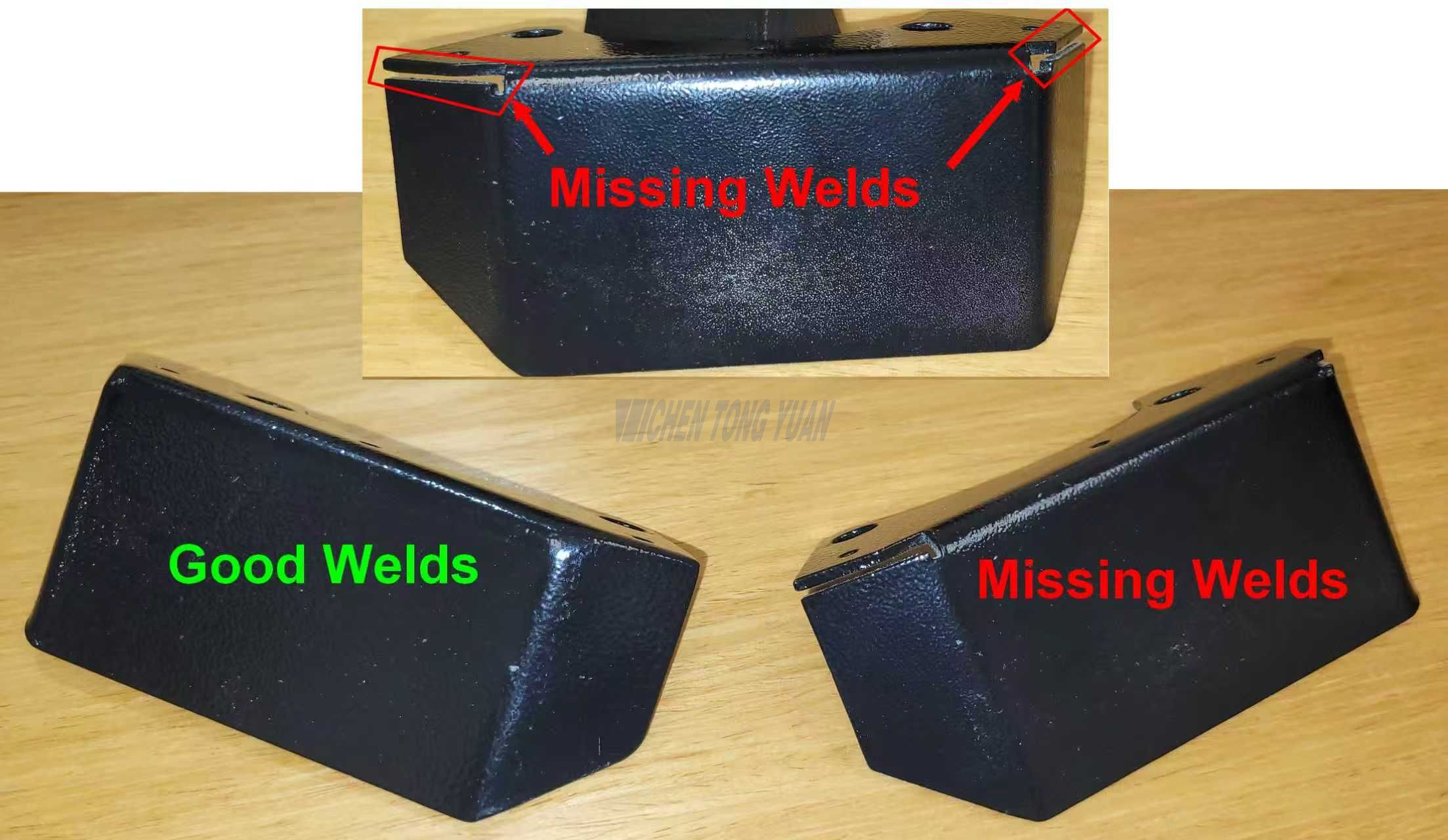
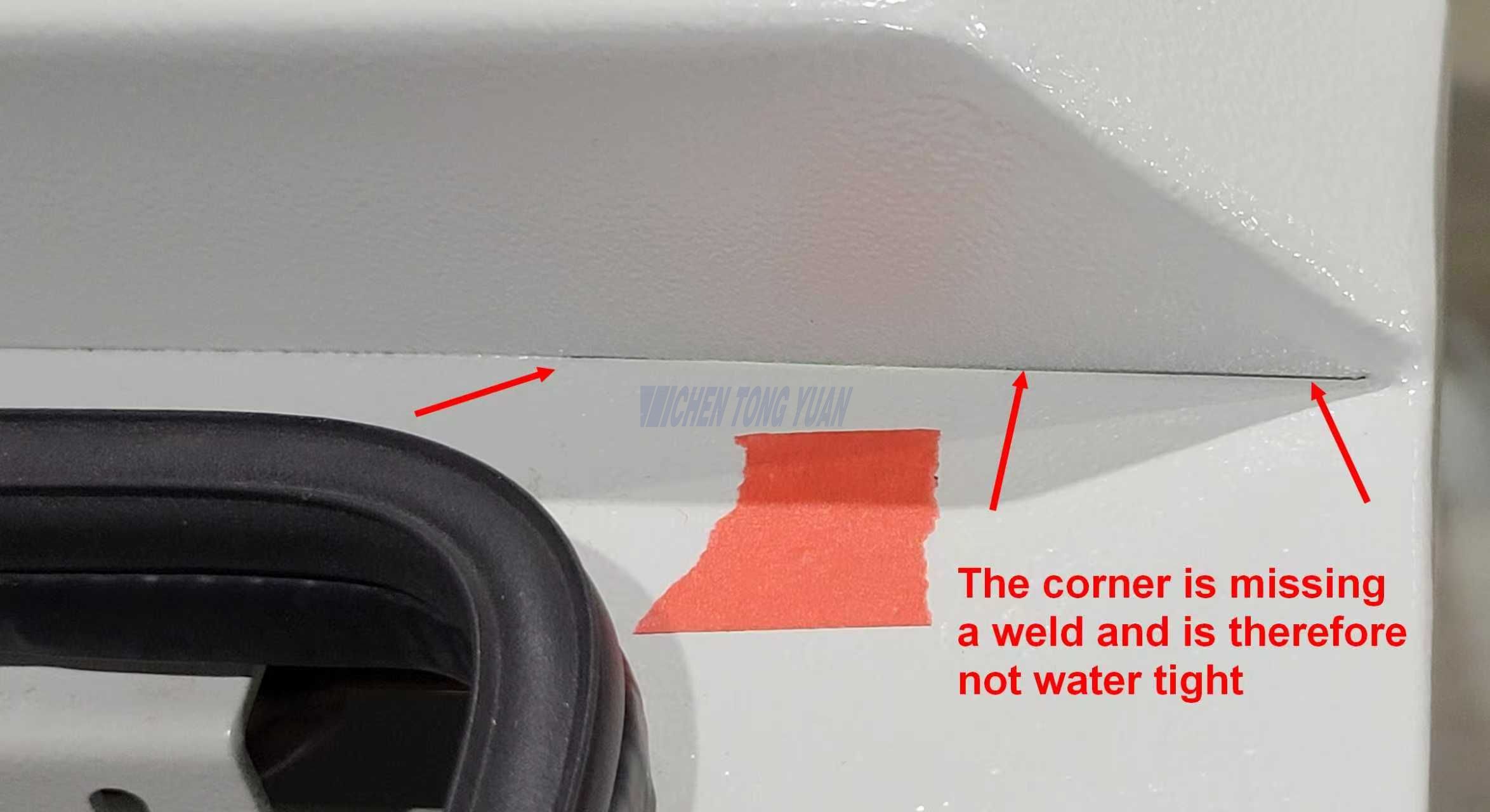
3.2.1 Missing Welds
Skipped weld points
Poor inspection control
Incomplete process supervision
Impact: Structural weakness and potential vibration failure.
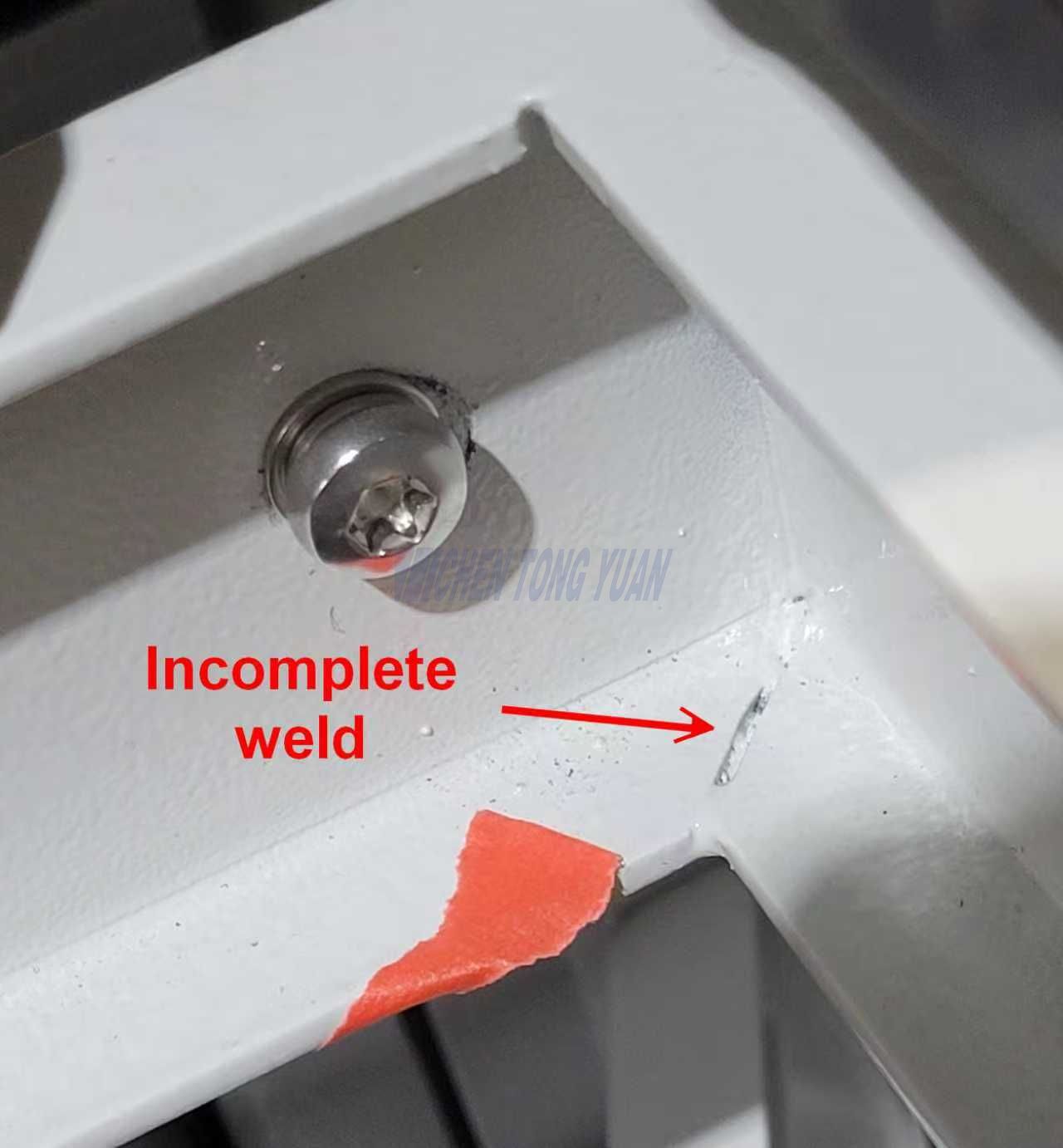
3.2.2 Incomplete Weld Penetration
Insufficient current
Improper joint design
Inadequate heat input
Impact: Reduced load-bearing capacity.
3.2.3 Porosity
Contaminated surfaces
Gas shielding issues
Impact: Reduced weld density and strength.
3.2.4 Undercut or Burn-through
Excessive heat input
Poor welding parameter control
Impact: Material thinning and structural weakening.
3.3 Post-Welding Structural Checks
After welding, manufacturers should verify:
Door alignment
Frame squareness
Mounting hole dimensional accuracy
Panel flatness
Distortion control reflects real manufacturing capability.
4.How Professional Factories Control Welding Quality
Consistency requires systematic process control.
4.1 Pre-Welding Control
Material inspection
Welding parameter setting
Fixture positioning
4.2 In-Process Control
Operator qualification
Standard welding procedures
Supervised workflow
4.3 Post-Welding Inspection
Visual weld inspection
Dimensional verification
Surface finishing check
Structural stability review
4.4 Advanced manufacturers may implement:
Welding documentation records
Internal quality audits
Random structural stress testing
Process control defines long-term reliability.
5.Frequently Asked Questions
1. Does smoother welding always mean stronger structure?
No. Structural strength depends on penetration and fusion, not surface smoothness alone.
2. Can welding quality affect IP protection rating?
Yes. Micro gaps or incomplete welds may reduce enclosure sealing performance.
3. How can buyers identify missing welds before shipment?
Request detailed production photos, structural inspection reports, or conduct on-site audits.
4. Which welding process is most suitable for energy storage cabinets?
Structural frames typically use MIG welding, precision areas use TIG welding, and thin panels use spot welding. Selection depends on component function.
5. Why is welding capability a key evaluation factor when choosing a supplier?
Because welding directly determines:
Structural durability
Transport safety
Long-term mechanical stability
System integrity
It reflects real manufacturing strength.
Conclusion
Sheet metal welding is the structural foundation of an energy storage cabinet.
It determines:
Mechanical strength
Fatigue resistance
Dimensional accuracy
Long-term safety
When selecting a cabinet manufacturer, welding capability should be evaluated as a core competency — not as a minor fabrication detail.
A reliable welded structure is the base of a reliable energy storage system.