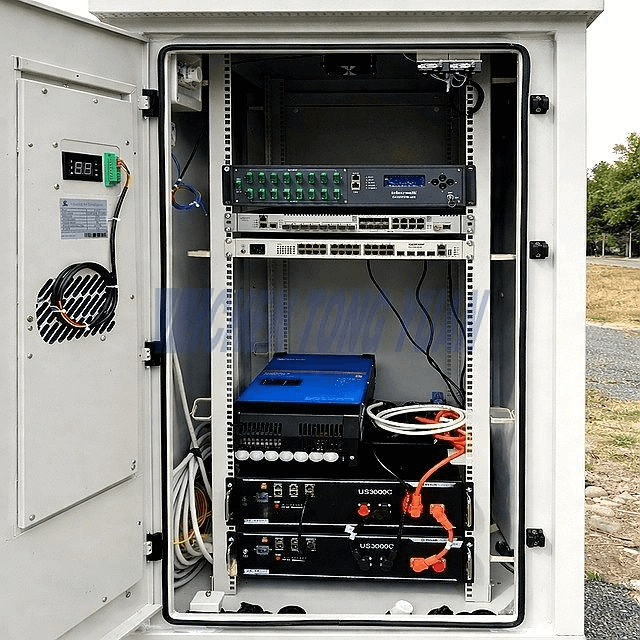
What Is an Outdoor Power Cabinet? Design, Technology, and Applications Explained
Views: 0 Author: Cytech Publish Time: 2026-02-05 Origin: Site
This article offers a detailed technical overview of outdoor power cabinets,including:
◆structure
◆components
◆EMS vs EMU vs FSU
◆Environment Monitoring System
◆protection standards
◆cooling technologies
◆applications
◆FAQ
With the rapid expansion of telecommunications networks, renewable energy systems, and industrial automation, reliable outdoor power infrastructure has become a critical requirement. One essential solution widely adopted across industries is the outdoor power cabinet.
An outdoor power cabinet provides a secure, weatherproof environment for housing electrical and power management equipment in outdoor conditions. It ensures system reliability, safety, and efficient operation even in extreme environments.
Understanding Outdoor Power Cabinet Design
An outdoor power cabinet is a specially engineered enclosure designed to integrate power supply systems while protecting sensitive electrical components from environmental hazards.
Key Design Features:
1.Heavy-duty steel, stainless steel, or aluminum construction
2.Corrosion-resistant surface treatment (powder coating or galvanization)
3.High ingress protection (IP55, IP65 or higher)
4.Multi-layer sealing for dust and water resistance
5.Reinforced structure for wind load and outdoor vibration
These features enable long-term outdoor operation with minimal maintenance.
Main Components Inside an Outdoor Power Cabinet
Although configurations vary by application, a typical outdoor power cabinet includes:
Power Distribution System (Power Distribution Units)
The PDU manages electrical power flow to various loads with built-in circuit breakers and protection mechanisms
Rectifiers and Inverters
Rectifiers convert AC to DC power for telecom and battery systems, while inverters convert DC back to AC for industrial loads.
Energy Storage Batteries
Often lithium-ion or lead-acid batteries for backup or renewable energy systems.
Cooling System
Such as cabinet air conditioners, heat exchangers, or fans to maintain proper temperature.
Monitoring and Control Units,also call it EMS ,EMU or FSU
Smart monitoring enables real-time tracking of: Voltage and current,Battery status,Internal temperature and humidity,Alarm notifications.Remote management improves operational efficiency.
Safety Protection
Circuit breakers, surge protection, grounding systems, and fire prevention measures.
EMS vs EMU vs FSU
In the field of energy storage systems, telecom cabinets, and industrial power solutions ,EMS, EMU, and FSU are related but NOT the same thing. They serve different control and management roles.
EMS (Energy Management System) is the top-level control system.
It is a software + hardware platform that:
◇Monitors energy generation (solar, grid, diesel, etc.)
◇Controls battery charging & discharging
◇Optimizes energy usage
◇Manages load scheduling
◇Reduces energy cost and improves efficiency
EMU(Energy Management Unit) is usually a hardware controller (local device).
△Collects data from batteries, inverters, meters, sensors
△Executes EMS commands locally
△Communicates with EMS software
FSU(Field Supervision Unit (or Field Service Unit in telecom),mainly used in telecom & outdoor cabinet systems.
◎Monitors cabinet environment (temperature, humidity, smoke, door status)
◎Monitors power equipment (rectifiers, batteries, AC units)
◎Sends alarms to remote monitoring platform
Quick Comparison :
Term
Full Name
Main Function
Typical Use
EMS
Energy Management System
System-level energy optimization
ESS, microgrid
EMU
Energy Management Unit
Local control hardware
ESS cabinets
FSU
Field Supervision Unit
Monitoring & alarms
Telecom cabinets
What is environment monitoring system in telecom industry?
In the telecom industry, an Environment Monitoring System (often called EMS or sometimes part of FSU solutions) is a system used to monitor, collect, and manage environmental and equipment status data inside telecom sites such as:
♂Outdoor telecom cabinets
♂Base station shelters
♂Data rooms
♂Power supply rooms
Its main goal is to ensure stable operation, prevent failures, and enable remote maintenance.
What Does an Environment Monitoring System Do?
An EMS continuously monitors:
Environmental Conditions
※Temperature
※Humidity
※Smoke / fire detection
※Water leakage
※Air conditioner status
Physical Security
⊙Door open/close status
⊙Vibration or intrusion alarms
Power & Equipment Status
☆AC power input
☆Rectifiers
☆Batteries (voltage, current)
☆UPS or power distribution units
How It Works
◇Sensors collect environmental & power data
◇EMS controller (or FSU) processes the data
◇Information is sent to a remote monitoring platform
◇Alarms are triggered if abnormal conditions occur
Operators can monitor thousands of telecom sites remotely.
Why Is EMS Important in Telecom?
✔ Prevents equipment overheating
✔ Reduces downtime
✔ Enables unmanned base stations
✔ Lowers maintenance cost
✔ Improves network reliability
Typical Components FOR EMS
♀Environment sensors (temp, humidity, smoke, water leak)
♀Power monitoring modules
♀Controller (FSU or EMS host)
♀Communication module (Ethernet, RS485, 4G/5G)
♀Monitoring software platform
EMS vs FSU (Telecom Field)
In many telecom projects:
FSU = hardware monitoring controller
EMS = complete monitoring system (hardware + software + platform)
So EMS is the whole solution, while FSU is usually the core device inside the cabinet.
An Environment Monitoring System in the telecom industry is a remote monitoring solution that tracks environmental conditions, power equipment, and security status of telecom sites to ensure safe, stable, and efficient network operation
Thermal Management Solutions for Outdoor Power Cabinets
Heat is a major factor affecting electrical equipment lifespan. Common cooling solutions include:
Cabinet Air Conditioners
Used in high-heat environments or sensitive electronics, ensuring precise temperature control.
Air-to-Air Heat Exchangers
Prevent dust and moisture while transferring heat effectively.
Ventilation Fans with Filters
Suitable for moderate climates and low heat loads.
Selecting the right cooling system depends on climate conditions, heat dissipation, and equipment sensitivity.
Protection Standards and Safety Features
High-quality outdoor power cabinets comply with international standards:
IP55 / IP65 Protection against dust and water
Anti-corrosion coatings for coastal and industrial areas
Grounding systems for electrical safety
Surge protection devices (SPD) against lightning and voltage spikes
Fire-resistant materials and optional fire suppression systems
Common Applications of Outdoor Power Cabinets
Outdoor power cabinets are widely used across multiple industries:
Telecommunications
Base stations
5G network sites
Outdoor telecom cabinets and shelters
They provide stable power and backup energy to keep communication systems running 24/7.
Energy Storage Systems (ESS)
Solar power stations
Wind energy projects
Battery energy storage containers
They manage power conversion, storage, and distribution efficiently.
Industrial and Smart City Infrastructure
Traffic control systems
Surveillance systems
EV charging stations
They support critical outdoor equipment with reliable power supply.
Key Benefits of Using Outdoor Power Cabinets
1. Strong Environmental Protection
With IP-rated sealing and corrosion-resistant materials, outdoor power cabinets protect equipment from extreme weather.
2. High Reliability
Designed for continuous operation with built-in cooling and safety systems.
3. Space Optimization
Compact structure integrates multiple power components into one enclosure.
4. Easy Maintenance
Front and rear access doors, modular design, and remote monitoring reduce maintenance time and costs.
5. Customizable Design
Can be tailored in size, cooling method, internal layout, and power capacity according to project needs.
How to Choose the Right Outdoor Power Cabinet
When selecting an outdoor power cabinet, consider the following factors:
Material (galvanized steel, stainless steel, aluminum)
Working with an experienced manufacturer helps ensure long-term reliability and performance.
Conclusion
An outdoor power cabinet is a crucial infrastructure solution for safely managing power systems in outdoor environments. From telecom networks to energy storage projects, these cabinets protect equipment, ensure continuous power supply, and improve system efficiency.
As demand for reliable outdoor power solutions grows with 5G and renewable energy development, high-quality outdoor power cabinets will continue to play a key role in modern infrastructure.
FAQ
What is an outdoor power cabinet used for?
An outdoor power cabinet is used to house and protect power distribution equipment, batteries, rectifiers, and control systems in outdoor environments. It is commonly applied in telecom base stations, energy storage systems, renewable energy projects, and industrial infrastructure.
What materials are outdoor power cabinets made of?
Outdoor power cabinets are typically made of galvanized steel, stainless steel, or aluminum alloy. These materials offer high strength, corrosion resistance, and long-term durability for harsh outdoor conditions.
What IP rating is recommended for outdoor power cabinets?
Most outdoor power cabinets use IP55 or IP65 protection levels.
IP55 protects against dust and water jets
IP65 provides higher protection against dust and heavy rain
The choice depends on environmental conditions.
How is temperature controlled inside an outdoor power cabinet?
Temperature is controlled using:Cabinet air conditioners,Air-to-air heat exchangers,
Ventilation fans with filters
For high-heat or sensitive equipment, air conditioners are the most effective solution.
Can outdoor power cabinets be customized?
Yes. Outdoor power cabinets can be customized in size, internal layout, cooling system, material, protection level, and power capacity based on specific project requirements.
What industries commonly use outdoor power cabinets?
Outdoor power cabinets are widely used in:Telecommunications (4G/5G networks),Energy storage systems (BESS),Solar and wind power stations,Smart city infrastructure,Industrial automation
How long do outdoor power cabinets typically last?
With proper materials, coatings, and cooling systems, high-quality outdoor power cabinets can operate reliably for 10–20 years, even in harsh environments.
Looking for a reliable outdoor power cabinet manufacturer ? Please contact us for more information.