Telecom Cabinet Manufacturing Process: How Outdoor Telecom Cabinets Are Manufactured
Views: 0 Author: Renny Publish Time: 2026-03-13 Origin: Site
Article Overview
This article explains the telecom cabinet manufacturing process and the key stages involved in producing reliable outdoor telecom cabinets.
Main steps include:
◇Engineering design and 3D modeling
◇Sheet metal cutting and bending
◇Cabinet welding and grinding
◇Powder coating surface protection
◇Cabinet assembly and testing
◇Final quality inspection
Understanding these steps helps explain how modern telecom cabinet manufacturing ensures durability, structural strength, and environmental protection.
Telecom Cabinet Manufacturing Video
The following video shows the real outdoor telecom cabinet manufacturing process in our factory, from sheet metal processing to final assembly.
Step-by-Step Telecom Cabinet Manufacturing Process
Below is the complete workflow used in professional telecom cabinet manufacturing, covering the major fabrication and assembly stages.
Step 1: 3D Design and Engineering Modeling
Every telecom cabinet manufacturing process begins with engineering design.
Using CAD and 3D modeling software, engineers define the cabinet’s structure, including:
cabinet dimensions
internal equipment layout
cable entry positions
mounting structures
Accurate design ensures the cabinet structure is suitable for outdoor telecom infrastructure and allows the production process to run efficiently.
Step 2: Sheet Metal Cutting (Laser Cutting and CNC Punching)
Once the design is finalized, production moves to sheet metal fabrication.
Two common processes are used in telecom cabinet manufacturing:
◇Laser cutting
Laser cutting machines process steel sheets used for cabinet panels, doors, and frames with high precision.
◇CNC punching
CNC punching machines create mounting holes, ventilation openings, and cable entry points required for telecom equipment installation.
These processes form the foundation of telecom cabinet fabrication.
Step 3: Sheet Metal Bending
After cutting, the sheet metal components are shaped using CNC press brake machines.
Bending transforms flat metal sheets into structural cabinet components such as:
◇cabinet side panels
◇door frames
◇top covers
◇cabinet base structures
Precision bending ensures accurate alignment during later stages of telecom cabinet assembly.
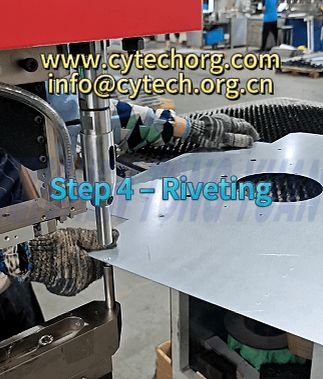
Step 4: Riveting and Structural Joining
During telecom cabinet fabrication, certain structural parts are connected through riveting.
Riveting is commonly used to:
◇connect sheet metal panels
◇reinforce cabinet structures
◇secure internal brackets
Because riveting does not generate heat, it prevents deformation of thin metal components. It is often used together with welding in the telecom cabinet production process.
Structural Welding and Surface Preparation
Step 5: Cabinet Frame Welding
Welding is one of the most important stages in telecom cabinet manufacturing.
It joins the main cabinet frame and structural components to create a rigid and durable enclosure.
High-quality welding ensures:
◇strong structural integrity
◇stable equipment support
◇long-term reliability for outdoor telecom cabinets
If you want to learn more about welding techniques, you can read our detailed guide on stainless steel welding in telecommunication cabinets, which explains welding methods and surface finishing processes.
After welding is completed, technicians perform surface grinding.
This process removes:
◇welding marks
◇metal burrs
◇surface imperfections
Grinding also prepares the cabinet surface for coating treatment, which is essential for the durability of outdoor telecom cabinets.
Step 7: Powder Coating for Corrosion Protection
To protect the cabinet from outdoor environments, manufacturers apply powder coating.
Powder coating provides:
◇corrosion resistance
◇moisture protection
◇UV resistance
◇improved durability
After curing at high temperature, the coating forms a strong protective layer on the cabinet surface.
This step is critical in the telecom cabinet manufacturing process for outdoor applications.
Telecom Cabinet Assembly and System Installation
Step 8: Outdoor Telecom Cabinet Assembly
Once surface treatment is completed, the cabinet enters the assembly stage.
Technicians install key structural components such as:
◇cabinet doors
◇hinges and locking systems
◇internal support structures
◇sealing components
Careful assembly ensures the cabinet maintains proper structural strength and environmental sealing.
Step 9: Cooling System Testing
Before final delivery, technicians test the cabinet interfaces designed for temperature control systems.
These tests verify:
electrical connections
installation interfaces
operational reliability
Proper testing ensures the cabinet can support telecom equipment operating in outdoor environments.
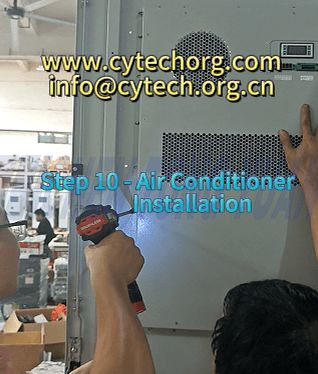
Step 10: Cabinet Air Conditioner Installation
In many applications, outdoor telecom cabinets require integrated cooling systems.
Installing cabinet air conditioners ensures that internal equipment operates within a safe temperature range.
Correct installation also guarantees proper airflow and reliable cooling performance.
Step 11: Final Quality Inspection
The final stage of telecom cabinet manufacturing is a comprehensive inspection.
Quality checks typically include:
structural dimension inspection
welding quality inspection
surface coating verification
assembly inspection
Through these procedures, manufacturers ensure every cabinet meets required engineering standards.
Conclusion
The telecom cabinet manufacturing process involves multiple precise engineering stages, from sheet metal fabrication to final assembly.
Each step contributes to the strength, durability, and environmental protection required for outdoor telecom cabinets used in communication infrastructure.
Understanding this process helps customers evaluate the quality and reliability of a professional telecom cabinet manufacturer.